Building Healthier Futures Through Whole-Person Care

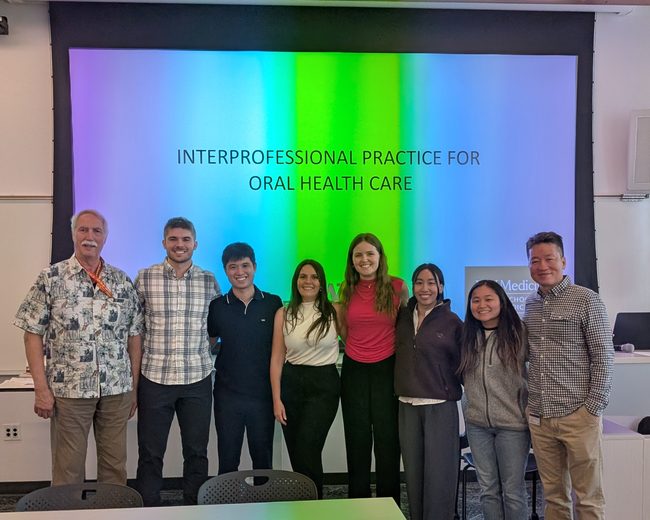
Faculty, students, and community partners gathered following the Interprofessional Practice for Oral Health Care session, highlighting collaboration across medicine, dentistry, and public health.

As children prepare to return to classrooms each fall, families often focus on school supplies, schedules, and routines. Back to school time also serves as a reminder that healthy futures are built through the habits and care that support children both inside and outside the classroom. 

At Arcora, we believe that oral health is essential to overall health. Yet oral health and medical care are not always taught, delivered, or experienced as connected parts of a person’s well-being. That’s why we work alongside partners across Washington to help bridge that gap and create opportunities for more integrated, whole-person care. 

Building Bridges Between Oral Health and Primary Care 

One example of that work took place at the University of Washington School of Medicine through their Foundations of Clinical Medicine (FCM) courses, offered at both the Seattle and Spokane campuses. 

FCM is a longitudinal, skills-based course for first-year medical students that helps prepare them for clinical rotations and future practice. Through the course, students develop essential skills, such as patient communication, interviewing, physical examination, and clinical reasoning. Just as importantly, they learn to view health through a comprehensive lens that recognizes the many factors that contribute to overall patient well-being.

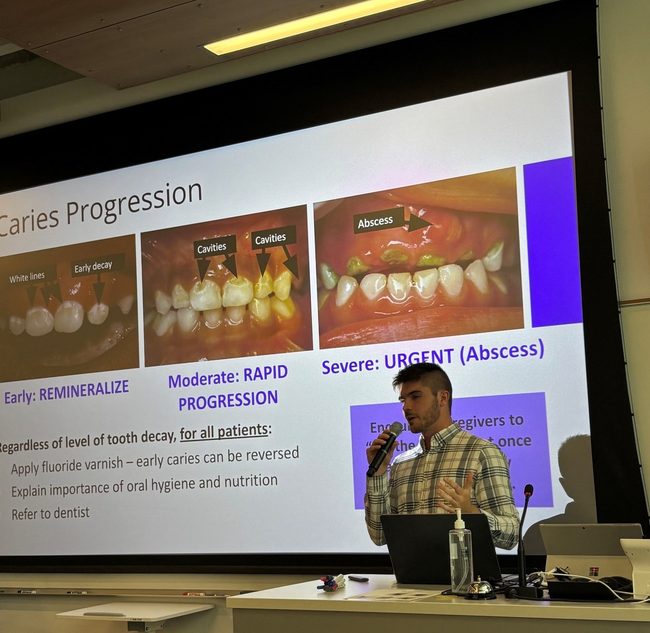
A presenter highlights the stages of tooth decay and the importance of early intervention, preventive care, and patient education.

That approach closely aligns with our work through MouthMatters, an Arcora program that trains primary care providers to integrate preventive oral health care into routine well-child visits. We partnered with the University of Washington to incorporate oral health into medical education, helping future healthcare providers understand the important connection between oral health and overall health. 

First year medical students learn how to assess oral health risks, educate families about healthy habits, and apply fluoride varnish to young patients. By integrating these preventive services into routine care, providers are better equipped to identify concerns early and help connect families to additional care when needed. 

For most young children, primary care visits occur more frequently than dental visits during their earliest years. Those visits create important opportunities to promote healthy habits, provide preventive care, and reinforce the message that oral health is an important part of overall health. 

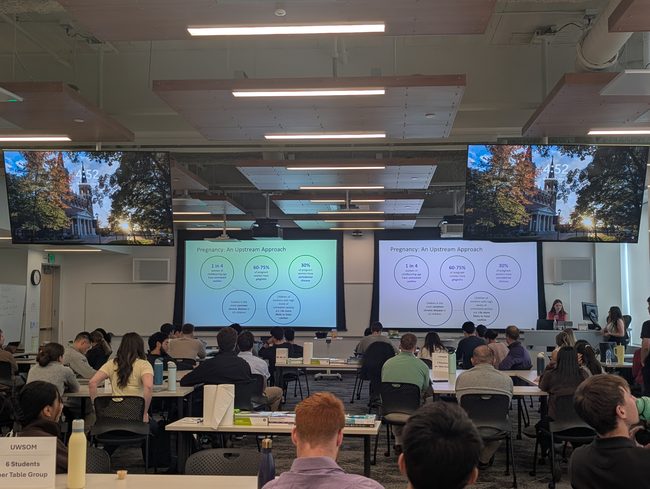
Attendees participate in a lecture examining the connection between pregnancy and oral health.

A Partnership for Prevention

Our partnership with the University of Washington reflects a shared commitment to preparing future healthcare providers to deliver whole-person care. By bringing oral health into conversations about overall health earlier in a provider’s training, we help strengthen the connections between medicine and dentistry and expand opportunities for prevention. 

Through partnerships like this one, we continue to expand opportunities for prevention and early intervention. By helping future health care providers recognize the role oral health plays in overall well-being, we can create stronger connections across the health care system and help more children and families get the care they need to thrive.

A special thank you to the many faculty, students, and community partners who made this program possible:

Seattle Foundations of Clinical Medicine Leads 

  • Karen McDonough, MD 
  • Kim O’Conner, MD 

Spokane Foundations of Clinical Medicine Leads 

  • Anne Lee, MD 
  • Christy Ryan, MD 

UW Spokane School of Dentistry faculty 

  • Lawerance Lawton, DDS 
  • Cheon Joo Yoon, DDS 

UW Dental Students 

  • Tabetha Clark 
  • Ella Cotter 
  • Jonathon Lang 
  • Josh Lee 
  • Christopher Penner 

UW Spokane Dental Students 

  • Hikaru Abe 
  • Samantha Gerlach 
  • Nathan Goh 
  • Shelyn Nguyen 
  • Ashton Searcy 

Community & Academic Partners 

  • Madlen Caplow, Arcora Foundation 
  • Toby Keys, UW School of Medicine 
  • Amy Kim, DDS, UW School of Dentistry 

Interested in learning more about how healthcare providers are incorporating oral health into routine care? Explore programs and partnerships that help connect oral health and overall health for children and families across Washington.

Teamwork Beyond the Pitch: Why Oral Health Takes a Community 

Men celebrating a goal during a sports match

In July, the country welcomed the world for the FIFA World Cup, and we celebrated incredible teamwork on the pitch. If you’ve ever watched a winning soccer team in action, you know it’s never about one superstar carrying the whole match (sorry, ball hogs). Championships are won through coordination—the defense talking to the midfield, the midfield setting up the forwards, the coach calling plays from the sideline, and yes, even that one person in the stands yelling “pass it” for reasons that remain unclear to everyone, including them. 

Turns out, it takes similar teamwork to improve oral health. While we often think of oral health as a personal responsibility, remembering to brush, floss, and schedule dental appointments, the reality is that healthy communities are built through teamwork. No single person or organization can improve oral health alone. 

The Starting Lineup

Think of community oral health like a soccer roster, where everyone has a position to play: 

Dentists and dental hygienists are your forwards—on the front lines, delivering the care that keeps smiles healthy. But forwards can’t score without support. 

Schools are the midfield, connecting the dots. They’re where kids spend most of their waking hours, making them a natural spot for screenings, education, and referrals to care. Washington schools played an important role in completing the latest Smile Survey. Through school screenings, this statewide assessment of second and third graders provides a snapshot of tooth decay rates, use of dental sealants, and other measures to give us key insights into our children’s oral health. 

Community organizations play defense, catching those who might otherwise fall through the cracks—families without easy access to transportation, insurance, or even basic information about why oral health matters in the first place (hint: it’s connected to nearly everything else in the body, from heart health to diabetes management). 

Policymakers are the coaches, setting the strategy from the sideline. Smart policy, like expanding Apple Health (Medicaid), community water fluoridation, dental benefits or funding school-based sealant programs, can change the outcome of the whole game before a single appointment happens. 

Take any one of these players off the pitch, and the whole formation falls apart. A great dentist can’t fix a system where families can’t afford care. A great policy means nothing if there’s no one on the ground to implement it. It really does take a full team. 

Why This Matters

Oral health disparities don’t happen by accident; they’re often the result of gaps between systems. A kid might see a school nurse who flags a dental issue, but if there’s no clear path connecting that flag to an actual dentist appointment, the play falls apart before it ever reaches the goal. 

That’s the gap we’re working to close. Not by replacing any one player on the pitch, but by helping the whole team move together. 

From the Pitch to the Community

When schools, health care providers, policymakers, community leaders, and local organizations work together, we can help remove obstacles and create pathways to better health. Small actions, from sharing information with families to supporting community programs, can have a lasting impact. 

The benefits reach far beyond a healthy smile. Good oral health supports overall health, school success, workplace productivity, and confidence. When people can access the care they need, entire communities are stronger for it. 

As visitors from around the globe visited our state, it’s a good reminder that world-class communities are built through teamwork. The same spirit that brings athletes, fans, and cities together can help create a future where everyone can achieve good oral health. 

From the pitch to the community, oral health matters.

Interested in learning more about efforts to improve oral health access across Washington? Explore resources and community initiatives that help build healthier futures for everyone. 

Social Determinants Work Groups

The Community Action Team for Social Determinants has broken into smaller workgroups around the goal areas below. Currently, we are using the Results Based Accountability (RBA) method of Turn-the-Curve thinking, to identify strategies and performance measures that address the root problems causing some of our communities’ most widespread health issues. These open meetings are paired with targeted outreach by BHT ACH Staff to key movers-and-shakers of social programs and public forums requesting feedback. Once developed, all strategies will be made available on this site for public review. Please consider joining us at one of our upcoming meetings:

Transportation: Increase access to transportation through innovative partnerships
Next Meeting: Tuesday, August 16th – 9am – 10:30am

Community Support: Increase community access to socially supportive peer-groups.
Next Meeting: TBD, please check back

Food: Increase access to healthy, affordable food
Next Meeting: Wednesday, August 17th – 10am – 11:30am

Education: Improve education attainment
Next Meeting: Thursday, August 18th – 10am – 11:30am

Housing: Increase access and placement to stable and safe housing
Next Meeting: Tuesday, August 23rd 1pm-2:30pm

Income Stability: Increase opportunities to stabilize income
Next Meeting: Wednesday, August, 24th -10am-11:30am OR 2pm-3:30pm

All are invited to join these meetings, hosted at the Philanthropy Center (1020 W Riverside, Spokane WA 99201). We welcome anyone to join us at any step in the process, but please do email justin@betterhealthtogether.org to let us know you’ll be joining. We discuss current and needed work in our region, and develop strategy to radically improve community health.